CLOSE
CLOSE
Search
Tungsten carbide is an inorganic material compounded from tungsten (W) and carbon (C) atoms in a 1:1 ratio, with the chemical formula WC. Its hardness is second only to diamond, reaching a Mohs hardness of over 9, and it has the following notable characteristics:
Extremely high hardness and wear resistance
Excellent compressive strength
Good thermal stability
Stable chemical properties
Because pure WC is too brittle, it is typically mixed and sintered with metals such as cobalt (Co) or nickel (Ni) as binders in the industry to form cemented carbide, which is more suitable for processing and use.
Tungsten carbide (WC) powder
Provides the material with high hardness and wear resistance, serving as the main structural component.
Metal binder (such as cobalt, Co)
Provides the material with a certain degree of toughness and ductility to prevent fracture.
Additives (optional)
Such as titanium, tantalum, niobium, etc., used to enhance specific properties of the material (e.g., corrosion resistance, impact resistance).
Through a high-temperature sintering process, these components are processed into various shapes and specific industrial products.
Due to its high performance, tungsten carbide products are widely used in the following industries. For manufacturers seeking reliable solutions for machining, tooling, and wear-resistant applications, professional tungsten carbide products can provide consistent performance and meet different industrial requirements.
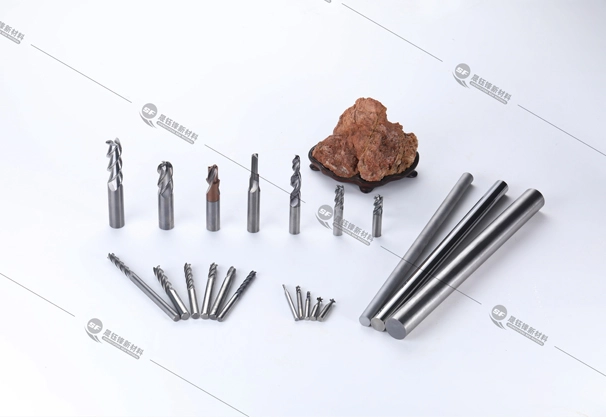
Used in cutting tools for CNC lathes, milling machines, drills, etc.
Keeps tools sharp, enhancing processing efficiency and accuracy.
Used to make rock drilling bits, coal cutter teeth, oil and gas drilling bits, etc.
Can withstand high impact and high wear environments.
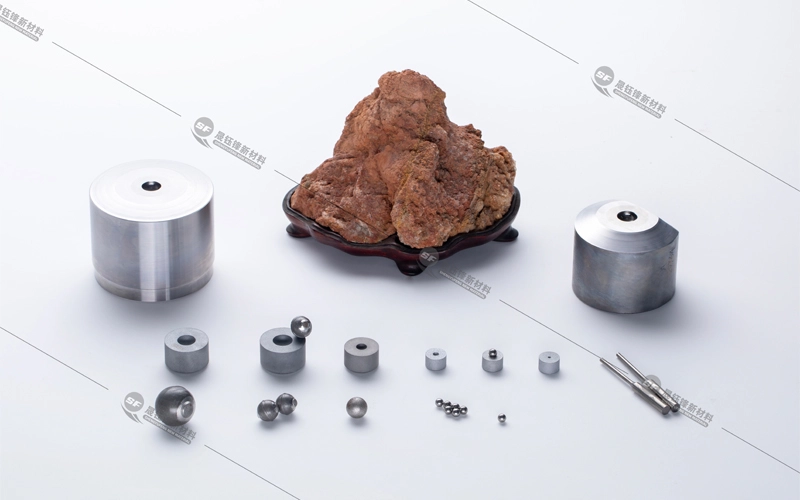
Components such as cold forging dies and wire drawing dies that require high hardness.
Improves the lifespan and forming accuracy of the molds.
Used to make high-strength, wear-resistant precision parts.
Such as nozzles, guide vanes, and high-speed bearings.
Corrosion-resistant and wear-resistant seals and valve body materials.
Improves the stability and service life of equipment.
For high-precision stamping dies, PCB drilling tools, etc.
Tungsten carbide products are indispensable key materials in modern advanced manufacturing. They feature tungsten carbide as the core, and through scientific alloy formulations and advanced sintering processes, they produce industrial parts with high hardness and high strength, serving the machinery, energy, aerospace, and many other industries. With ongoing technological developments, cemented carbide products will continue to progress towards higher precision, greater durability, and broader applications.
Contact Us
 English
  English