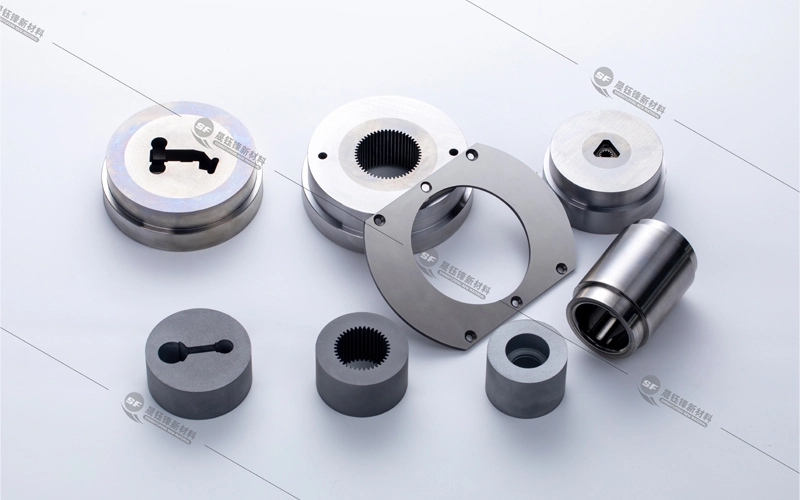
Custom Tooling Options
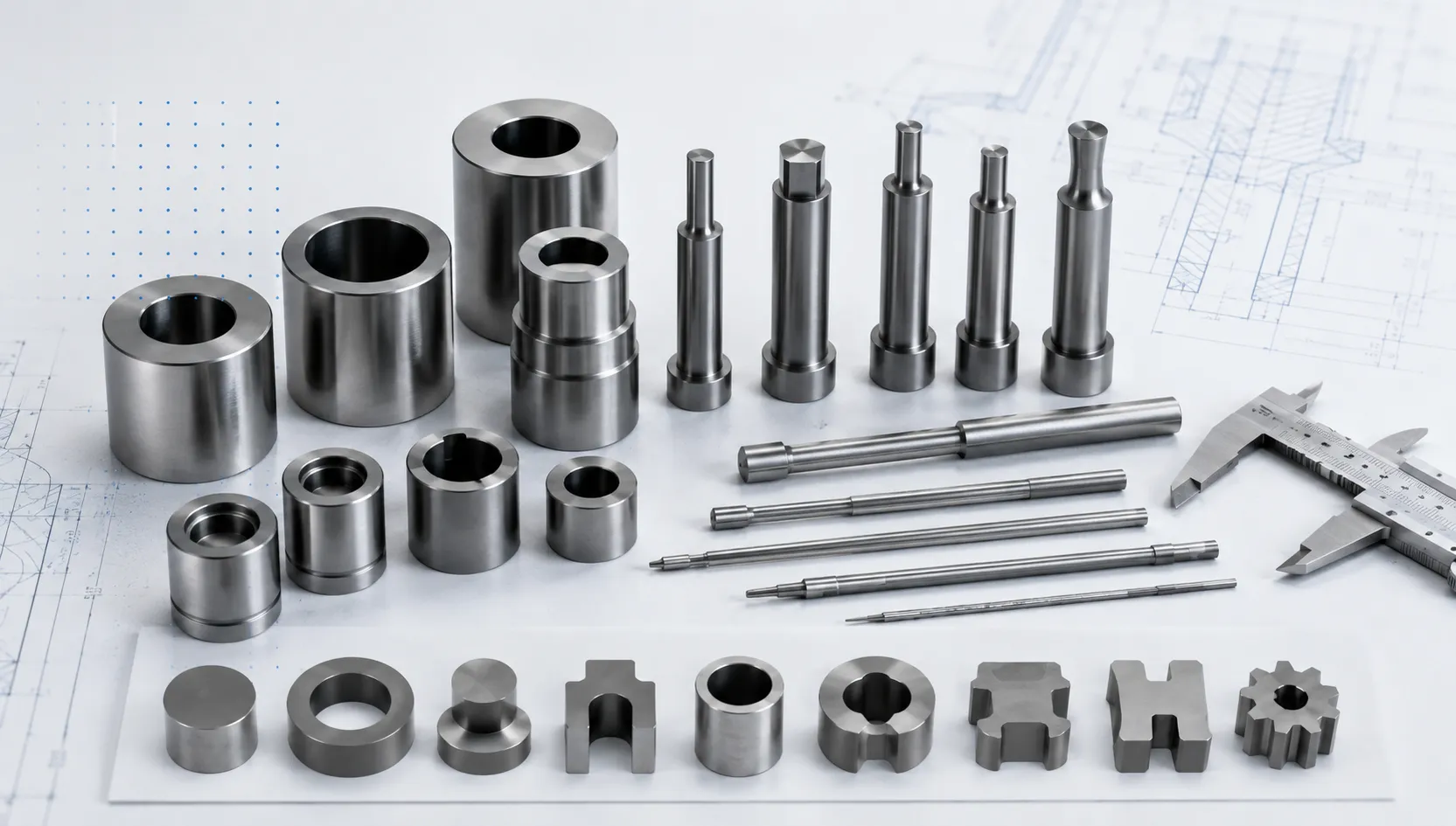
dies, die inserts, upper punches, lower punches, core rods, mandrels
Tooling structure: single-level, multi-level, single-cavity or multi-cavity — subject to drawing review
round, ring-shaped, stepped, hollow or custom profile
tungsten carbide grade selected by application requirements
precision ground or polished according to drawing requirements
prototype, replacement tooling or batch production
Tolerance / surface finish
manufactured according to confirmed drawing and factory capability
Powder Compaction Tooling Components We Manufacture
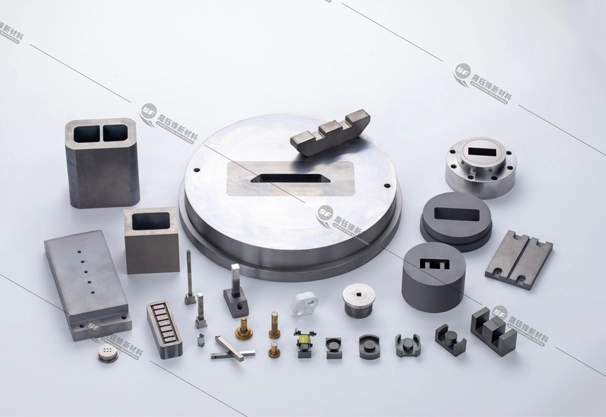
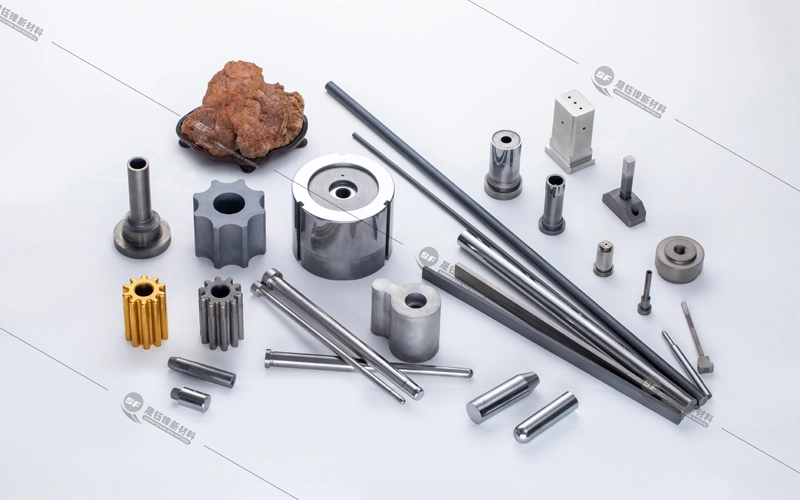
A powder compaction tool set may contain several coordinated working components. SYF manufactures custom carbide tooling parts according to customer drawings, samples and press requirements.
• Dies and die inserts: form the external profile of the compact and maintain cavity geometry during repeated pressing.
• Upper and lower punches: apply compaction pressure and create end faces, steps and other axial features.
• Core rods and mandrels: form center holes and internal profiles in ring-shaped or hollow components.
• Replacement tooling components: support maintenance when individual punches, dies or mandrels become worn or damaged.
Components can be quoted separately or reviewed as a coordinated tooling set according to the actual press layout.
Why Use Tungsten Carbide for Powder Compaction?
01
Maintain Cavity Profiles and Critical Dimensions
02
Reduce Wear-Related Variation Between Compacted Parts
03
Support Smoother Powder Filling and Ejection
04
Improve Production Consistency with Abrasive Powders

Maintain Cavity Profiles and Critical Dimensions
High-wear die cavities can gradually lose their original geometry during repeated pressing cycles, causing dimensional variation in the finished compact. Properly selected powder compaction tooling helps maintain critical profiles, holes and stepped features over longer production runs.
Reduce Wear-Related Variation Between Compacted Parts
Uneven wear on dies, punches and core rods can affect compact density, dimensions and surface consistency from batch to batch. Tungsten carbide working components provide stable wear resistance, helping manufacturers achieve more repeatable part quality during continuous production.
Support Smoother Powder Filling and Ejection
Precision-ground and polished working surfaces can reduce powder adhesion, friction and drag during filling, pressing and part ejection. Well-finished powder compaction tooling also helps lower the risk of surface scratches, sticking and damage to fragile green compacts.
Improve Production Consistency with Abrasive Powders
Abrasive powder materials can accelerate cavity wear and gradually change the fit between tooling components. Carbide powder compaction tooling helps preserve dimensional relationships and working clearances, supporting more consistent compaction results across repeated production cycles.

 English
  English